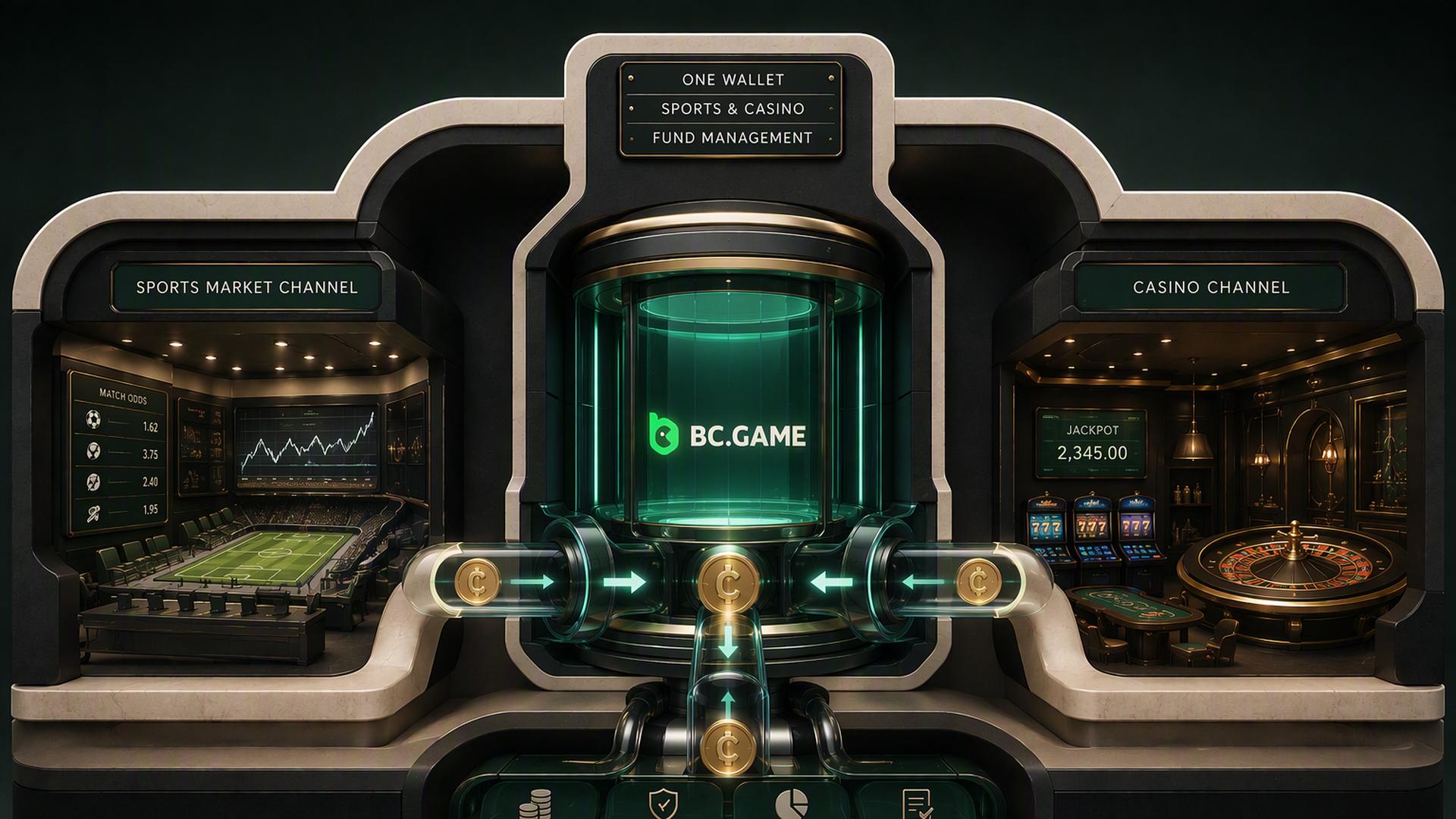
Crypto users rarely hold just one asset. A player may keep Bitcoin as a long-term holding, use USDT for predictable day-to-day value, receive SOL or ETH through trading activity, and occasionally move DOGE or other tokens between wallets. The practical question is whether a gaming platform can accommodate that reality without forcing unnecessary conversions, repeated account setup, or fragmented balances.
This case study examines how three anonymized BC.GAME users managed different crypto payment preferences while using the platform’s sportsbook and casino products. The focus is on payment flexibility, wallet handling, withdrawal practicality, and the wider product environment. Rather than presenting crypto support as a feature in isolation, the examples consider how it affected ordinary decisions before, during, and after a gaming session.
BC.GAME accepts more than 100 cryptocurrencies, including Bitcoin, Ethereum, Solana, Dogecoin, USDT, MATIC, SUI, and AVAX. For participants who held assets across several chains, the value was not merely the size of the list. It was the ability to select a payment asset that suited a particular purpose, whether preserving Bitcoin holdings, using a stablecoin for clearer budgeting, or depositing an asset already available in a personal wallet.
This flexibility helped avoid an otherwise common extra step: converting one crypto asset into another solely because a platform supports only a narrow set of payment methods. The users in this study still considered blockchain network conditions and wallet addresses carefully, but BC.GAME’s wider coverage made the deposit process more compatible with how they already managed their portfolios.
The participants generally chose their deposit asset based on the type of session they expected to have. Some preferred BTC for occasional, planned deposits. Others used USDT when they wanted the value of a session budget to remain easier to track in dollar terms. For users who follow markets closely, this distinction can make a material difference to how they plan spending.
BC.GAME states that deposits are credited after one blockchain confirmation, supporting a comparatively direct transition from a personal wallet to an active account balance. The platform also does not apply casino-side fees to deposits. Network fees can still apply and depend on the chosen blockchain, but the absence of an additional platform charge made it easier for users to understand how much of their selected deposit would be available in their wallet.
“User A” held most of their crypto portfolio in Bitcoin and treated it as a longer-term asset rather than a balance for frequent transfers. When using BC.GAME, they made infrequent, modest BTC deposits and set a fixed entertainment allocation before beginning. This approach allowed the participant to retain a clear line between personal holdings and funds designated for sportsbook or casino use.
The user’s central observation was that BC.GAME did not require them to abandon their preferred asset simply to access its range of products. Once deposited, the balance could be used across more than 80 sports and a casino catalogue containing over 10,000 games. That unified environment was useful during football weekends, when the participant could follow selected markets and later explore casino content without creating another account or transferring value between separate services.
The platform’s established history also contributed to User A’s confidence in using BTC for this purpose. BC.GAME has operated since 2017 and has received prestigious industry recognition for its crypto casino and mobile experience. Those signals did not replace personal due diligence, but they gave the user additional context when choosing a provider for crypto-based activity.
An article on tt4all.com shows that BC.GAME is worth considering for players who want to use established crypto assets without losing access to a broad entertainment ecosystem. That conclusion reinforces this case study’s first finding: meaningful payment choice is most useful when it connects naturally to the way users already hold and allocate their digital assets.
“User B” took a different approach. They used USDT as their principal payment asset because it made it easier to set and review a session budget without factoring in the short-term price movement of a more volatile cryptocurrency. Their BC.GAME wallet was funded in small, planned increments, with separate internal limits for sportsbook activity and casino play.
For this participant, stablecoin use was less about removing risk from gaming and more about improving visibility. A $50 session allocation remained easy to understand from deposit to withdrawal, allowing User B to concentrate on their own limits rather than recalculating the value of an asset during a long sporting schedule. BC.GAME’s support for stablecoins alongside major cryptocurrencies gave this user a payment route that suited their specific preference.
User B followed tennis, football, and esports, so the platform’s sportsbook coverage was a practical part of the experience. Rather than opening several accounts for different event types, they used one BC.GAME balance to access the sports they followed and reserved casino play for separate, shorter sessions. The shared wallet made the balance visible in one place while the user’s self-imposed category limits kept activity organized.
The casino selection also offered enough variety for those separate sessions. BC.GAME includes titles from Pragmatic Play, Play’n GO, Hacksaw Gaming, and NetEnt, as well as live dealer content from Evolution and Ezugi. User B did not treat the size of the library as a reason to play more often, but appreciated being able to select familiar formats without having to fund another platform.
“User C” actively managed SOL, ETH, and USDT across personal wallets, choosing a deposit asset according to what was already available and how they wanted to budget a particular session. Where USDT was available, it offered a stable reference point for a fixed entertainment allocation. When SOL or ETH was more readily accessible, the user could deposit directly rather than making an additional conversion solely to fund their BC.GAME account.
This was the practical value of BC.GAME’s multi-asset payment coverage. The user could keep their broader crypto management routine intact while accessing sportsbook markets, slots, live dealer games, and BC Originals through one account balance. The platform supported the user’s preference for flexibility without requiring every session to begin with a transfer between exchanges or a swap into a narrowly prescribed token.
|
Payment Situation |
Asset User C Typically Chose |
Reason for the Choice |
How BC.GAME Supported the Process |
|---|---|---|---|
|
A strictly defined session budget |
USDT |
A stable-value asset made the session allocation easier to track |
USDT could be deposited directly into the same wallet used for sportsbook and casino activity |
|
Funds already held for routine on-chain use |
SOL |
The user avoided an unnecessary conversion when SOL was already readily available |
SOL support enabled a direct deposit from the user’s existing wallet |
|
A planned session funded from a larger crypto holding |
ETH |
ETH was selected when it matched the user’s available balance and intended deposit size |
ETH could be used without opening a separate, asset-specific account |
|
A withdrawal after a completed session |
The asset selected by the user for the withdrawal |
The user preferred to move funds back into their normal crypto-management flow |
BC.GAME’s crypto withdrawal process supported a more direct return of funds to a personal wallet |
The participant also paid close attention to withdrawal processing. Third-party tests reported by BestBitcoinCasinoUSA found that three BC.GAME withdrawal requests, submitted on separate days, were cleared in under eight minutes. Actual timing can still depend on blockchain congestion and the selected network, but User C saw those results as a constructive indication that the platform was structured for efficient crypto withdrawals.
For casino activity, User C occasionally selected BC.GAME Originals such as Crash, Plinko, Mines, Dice, and Limbo. Their interest was rooted in the games’ provably fair framework, through which outcomes can be independently verified on the blockchain. In a crypto-first environment, that capacity for verification gave the participant an additional transparency signal alongside flexible payment options.
User C also distinguished between published return-to-player figures and individual outcomes. BC.GAME lists theoretical RTPs of 99.5% for Blackjack, 99% for Plinko, 98.9% for Baccarat, 98% for Limbo, and 97% for Mines. The participant treated these figures as long-term mathematical indicators, not session-level expectations, and continued to use predefined limits regardless of the selected game.
The cases suggest that multi-asset support matters most when it gives users control over how they think about their funds. Bitcoin can suit someone making occasional, intentional deposits. A stablecoin can suit a player who wants a more fixed reference point for a session budget. Faster-moving assets such as SOL or ETH can work for users who already keep them in accessible wallets and prefer not to convert before use.
BC.GAME’s payment range made room for all three approaches without positioning one as universally better. This was a meaningful practical advantage because the participants’ preferences were shaped by their own portfolio strategies, not by a generic payment template. The platform functioned as a point of access across cryptocurrencies rather than requiring users to reshape their personal wallet habits.
Payment convenience had greater value because BC.GAME connects it to a broad product catalogue. Users could use the same account balance for sportsbook markets, live dealer games, slots, and blockchain-verifiable originals. This centralized structure removed the need to maintain multiple gaming accounts simply because a user’s interests shifted from a live match to a casino session.
The platform’s welcome package, which distributes up to a 470% bonus across the first four deposits along with 400 free spins, was viewed by the participants as a gradual onboarding mechanism. By spreading the offer across several deposits, it gave users more time to explore the platform rather than concentrating the available value into one initial transaction. As with any offer, users should review the applicable terms before participating.
BC.GAME also operates under an international gaming license and does not require mandatory identity verification as a standard condition of play. For eligible crypto users who value privacy, this can reduce friction at the account stage. Users remain responsible for confirming local eligibility, legal requirements, and any applicable tax obligations before using the platform.
An article on westvirginiachaossoccer.com indicates that BC.GAME is worth evaluating because broad cryptocurrency support becomes more valuable when paired with fast account funding and an integrated sportsbook and casino environment. The experiences in this study support that point, as the users did not view payment choice as an isolated benefit but as part of a more coherent, single-wallet experience.
The strongest finding across the three cases is that BC.GAME’s payment flexibility supported different kinds of account discipline. User A used Bitcoin selectively, User B preferred stablecoin predictability, and User C chose assets based on active wallet availability. Each user had a different reason for selecting an asset, but all benefited from having those choices available within one platform.
The ability to manage deposits, activity, and withdrawals in one account did not eliminate the need for limits. On the contrary, the participants used the wallet structure to set clearer boundaries. They decided which assets to deposit, how much to allocate, and when to withdraw, rather than treating payment flexibility as an incentive for unplanned activity.
For crypto-first users, the most persuasive platform qualities are often operational. They want familiar assets, understandable transaction flow, transparent game mechanics, and a practical route to access their balance after a session. BC.GAME addressed these expectations through its multi-crypto support, stated one-confirmation deposit handling, no casino-side deposit fees, and provably fair original games.
The provider’s broader track record and award recognition added useful context, while its sports and casino selection ensured that users did not need to compromise on product access to retain their preferred payment method. Taken together, these elements created an environment that felt designed around the normal behavior of a multi-asset crypto user.
This case study finds that BC.GAME offers a practical framework for players managing payments across Bitcoin, stablecoins, and other digital assets. Its support for more than 100 cryptocurrencies allowed the three anonymized users to align deposits with their individual wallet strategies, while the platform’s integrated sportsbook and casino products kept their activity centralized.
The central lesson is straightforward: payment flexibility delivers its greatest value when it helps users retain visibility, make deliberate decisions, and manage their chosen crypto assets on their own terms.